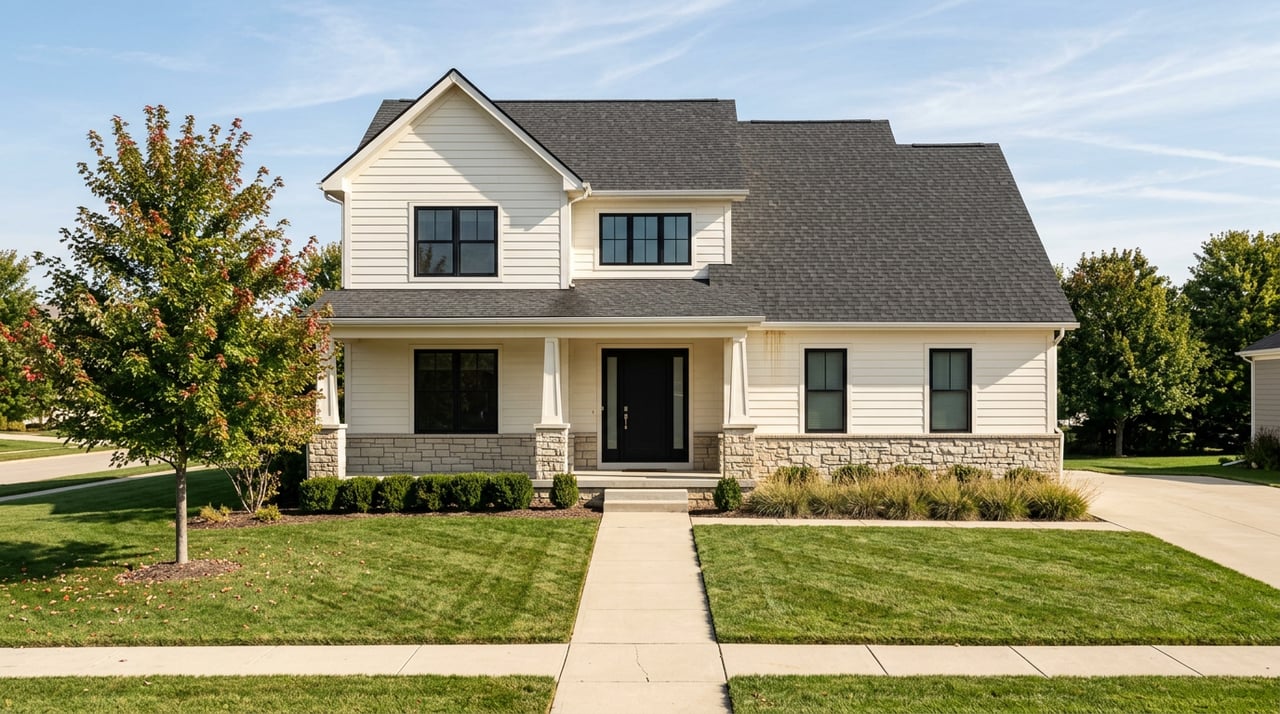
A buyer comparing Bettendorf to Rock Island usually starts with the same number: the effective property tax rate. Scott County runs somewhere around 1.5 percent. Rock Island County runs close to double that, often quoted near 2.9 percent. On paper, crossing the river to Iowa looks like the obvious money move.
Then the actual tax bills show up, and the story gets more complicated. In Bettendorf, a home valued at $259,600 carries a median annual tax bill of $3,824, based on the city's 1.50 percent effective rate. Across the river in Rock Island, where the effective rate runs nearly double at 2.90 percent, the median annual bill is $3,364, according to property tax data compiled by Ownwell. The rate is almost twice as high. The bill is smaller. That gap is the whole point of this piece, and it changes how you should shop, not just how you should feel about the number on a listing sheet.
The Rate Everyone Compares
The rate comparison isn't wrong, it's just incomplete. Scott County's effective property tax rate has been reported anywhere from 1.32 percent to 1.56 percent depending on the data source and the year of assessment, while Rock Island County estimates run from roughly 2.0 percent up to 2.9 percent. However you slice it, Illinois-side rates in Rock Island County consistently land close to double Iowa-side rates in Scott County. That's a real, structural difference between two state tax systems, and it's the number most people repeat when they talk about why Bettendorf feels like the safer bet for long-term ownership costs.
The problem is that a rate by itself doesn't tell you what you'll actually pay. A rate needs a home value attached to it before it means anything, and that's exactly where the comparison falls apart.
The Bill That Actually Lands in the Mailbox
Here's the same comparison, run against real dollar figures instead of percentages.
| Effective Rate | Median Home Value | Median Annual Tax Bill | |
|---|---|---|---|
| Bettendorf, IA | 1.50% | $259,600 | $3,824 |
| Rock Island, IL | 2.90% | (implied by rate and bill) | $3,364 |
The Rock Island rate is nearly double. The Rock Island bill is lower. That's not a rounding error, it's the direct result of home values on the Illinois side sitting well below Iowa-side values. Rock Island's own median sale price came in at $134,000 over the three months ending May 2026. Moline's median listing price was $168,000 as of August 2026. Bettendorf's citywide median listing price, by contrast, was $411,950 as of August 2026, according to Realtor.com data reported in a September 2026 market summary. A rate that's twice as high, applied to a home that costs roughly a third as much, produces a bill that's actually smaller.
This is the piece that gets lost when people compare neighborhoods by rate alone. The rate tells you how aggressively a jurisdiction taxes value. It tells you nothing about how much value you're buying in the first place. If you're deciding between a house in Bettendorf and a comparably sized house in Rock Island or Moline, the rate difference matters far less than the price difference, because the price difference is usually larger by a wide margin.
Why Iowa's Rate Looks Lower but Moves Differently
There's a second layer here that catches Iowa buyers off guard just as often as it catches Illinois buyers who assume the systems work the same way.
Illinois assesses property at a fixed 33.33 percent of market value, set by state law. It doesn't move year to year based on how fast home values are rising. Iowa does the opposite. Every year, the Iowa Department of Revenue calculates a residential "rollback" percentage that limits how much of a home's assessed value is actually subject to tax. For fiscal year 2026, that rollback sits at 47.43 percent, up slightly from 46.34 percent the year before. In practical terms, a Bettendorf home assessed at $300,000 isn't taxed on $300,000. It's taxed on roughly $142,000, because only that rollback share of the assessed value counts as taxable.
The rollback exists to keep tax bills from spiking every time home values jump, since Iowa law caps the statewide growth in taxable residential value at 3 percent a year. That's a genuine protection for homeowners. But it also produces a confusing side effect: the annual notice Iowa counties are required to mail can make a tax increase look far larger than what actually shows up on the bill.
Bettendorf lived through exactly this in March 2025, when the state-mandated Property Tax Notice implied residents would see a 12.5 percent increase for the coming fiscal year. City Finance Director Jason Schadt stepped in to clarify that the notice assumed assessed values had jumped 10 percent, when most Bettendorf property owners saw no change at all. The real increase, once the rollback shift was factored in, came out to less than 2.5 percent. The notice wasn't wrong, exactly, it just used a statewide assumption that didn't match what was happening on individual properties.
If you buy in Bettendorf, expect a similar letter to show up in your mailbox every spring, and expect it to look scarier than the number that actually lands on your bill.
What This Means If You're Comparing Both Sides of the River
The practical takeaway isn't "Iowa is cheaper" or "Illinois is cheaper." It's that the rate alone can't answer that question for you, and the home price gap between the two sides of the river is currently large enough to override whatever the rate difference suggests.
If you're weighing a Bettendorf purchase against something in Rock Island or Moline, ask for two numbers on any specific property you're considering: the current assessed value and the most recent local levy rate. Those two figures, multiplied together and adjusted for Iowa's rollback if you're on that side of the river, will tell you far more than a county-wide effective rate ever could.
For a sense of what's currently on the market in Bettendorf, a Pleasant Valley Townhomes unit on Faiths Way is listed at $344,516 as of early September 2026, under construction with availability expected in late fall. That price point sits comfortably inside Bettendorf's current median range and gives you a real number to run the rollback math against, rather than guessing from a citywide average.
Across the river, Rock Island and Moline's lower entry prices mean a buyer's total carrying cost, taxes included, can end up close to what a Bettendorf buyer pays on a pricier home, even with the higher Illinois rate baked in. Neither side is automatically the better financial move. It depends on the specific house, the specific assessment, and what you're comparing it against.
Two Questions Worth Asking Before You Compare
Does a lower rate ever produce a lower bill? Sometimes, but only when home values on both sides of the comparison are close enough that the rate difference dominates the math. Given the current price gap between Bettendorf and the Illinois-side cities, that's not usually the case right now.
How do I get real numbers instead of citywide medians? Ask for the specific parcel's current assessed value and levy rate before you write an offer. County assessor and treasurer offices on both sides of the river publish this information, and it's the only way to know what a specific address will actually cost you to hold.
If you're weighing a move across the river, in either direction, the numbers on a single listing sheet rarely tell the whole story. Rainmaker Collective works both sides of the Mississippi every day and can walk you through the real math on a specific property before you make an offer. Contact us when you're ready to look past the rate and into the bill.